Mesh Office Chairs
If you spend most of the day at a desk, the chair underneath you affects more than comfort. Mesh office chairs use a tensioned mesh back instead of solid foam padding, so air moves through instead of building up against your body over a long shift. That difference shows up most in open-plan offices, call centres, and any workstation used for eight hours or more.
Sit Spot’s mesh office chairs range from entry-level task seating to fully adjustable ergonomic models, all built for daily commercial use rather than occasional home use. They sit within our full range of commercial seating, alongside task, executive and boardroom chairs, so if mesh isn’t the right fit for your setup, there are alternatives close by.
Need Advice ?
Free Consultation- Sorry, this product cannot be purchased.
Showing 1–20 of 213 results
-

Expo High Back with Arms

-

YARRA
-

Expo High Back
-

Neo Sled
-

OYEX1L
-

OYEX1M
-
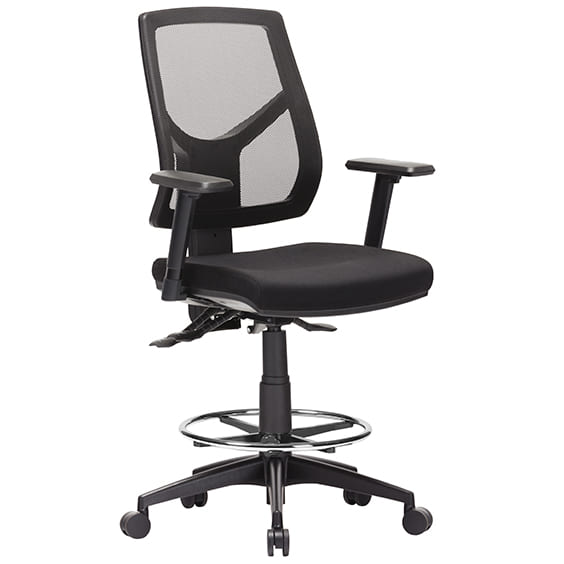
Expo High Back Drafting Chair with Arms
-

Gala
-
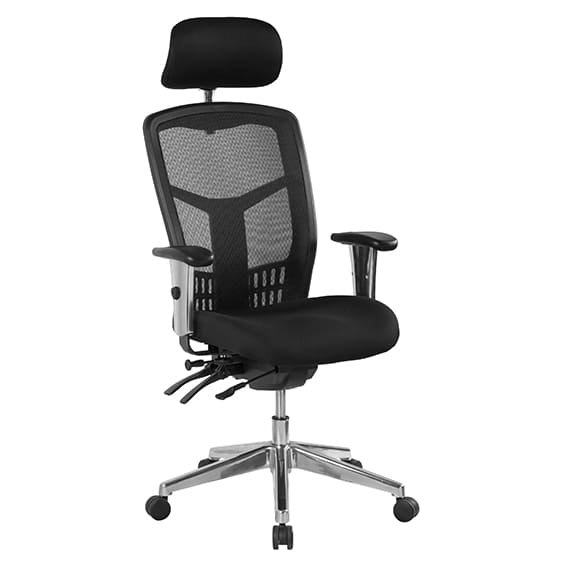
OYEX1H
-
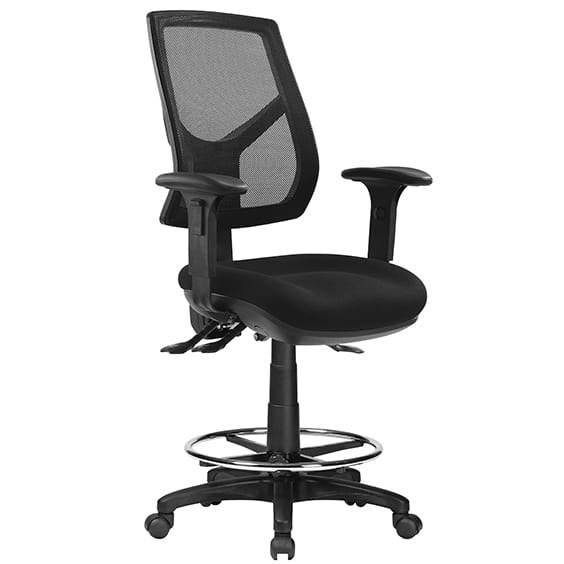
Rio High Back Dafting Chair with Arms
-
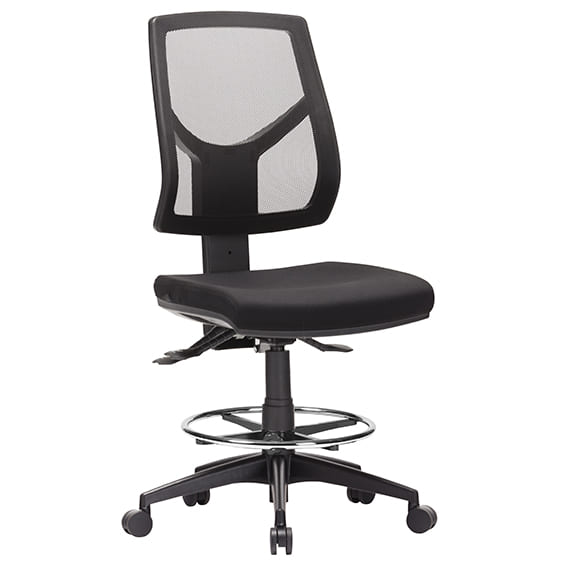
Expo High Back Drafting Chair
-
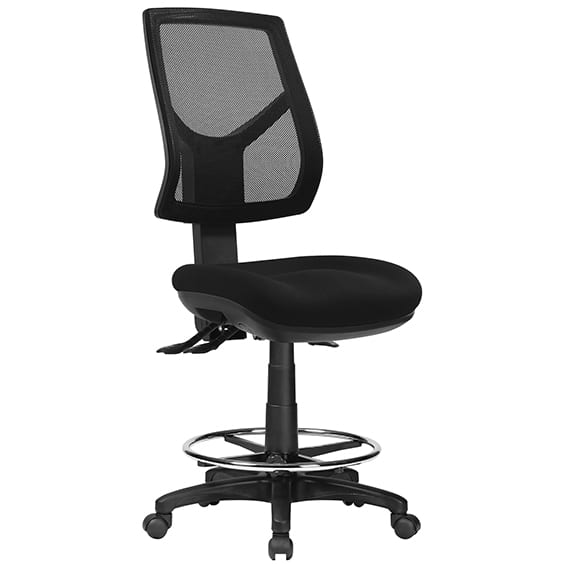
Rio High Back Drafting Chair
-


Aero 200Plus Mesh Executive
-

Air Mesh Back Training Chair
-

Alpha Mesh Executive Chair
-
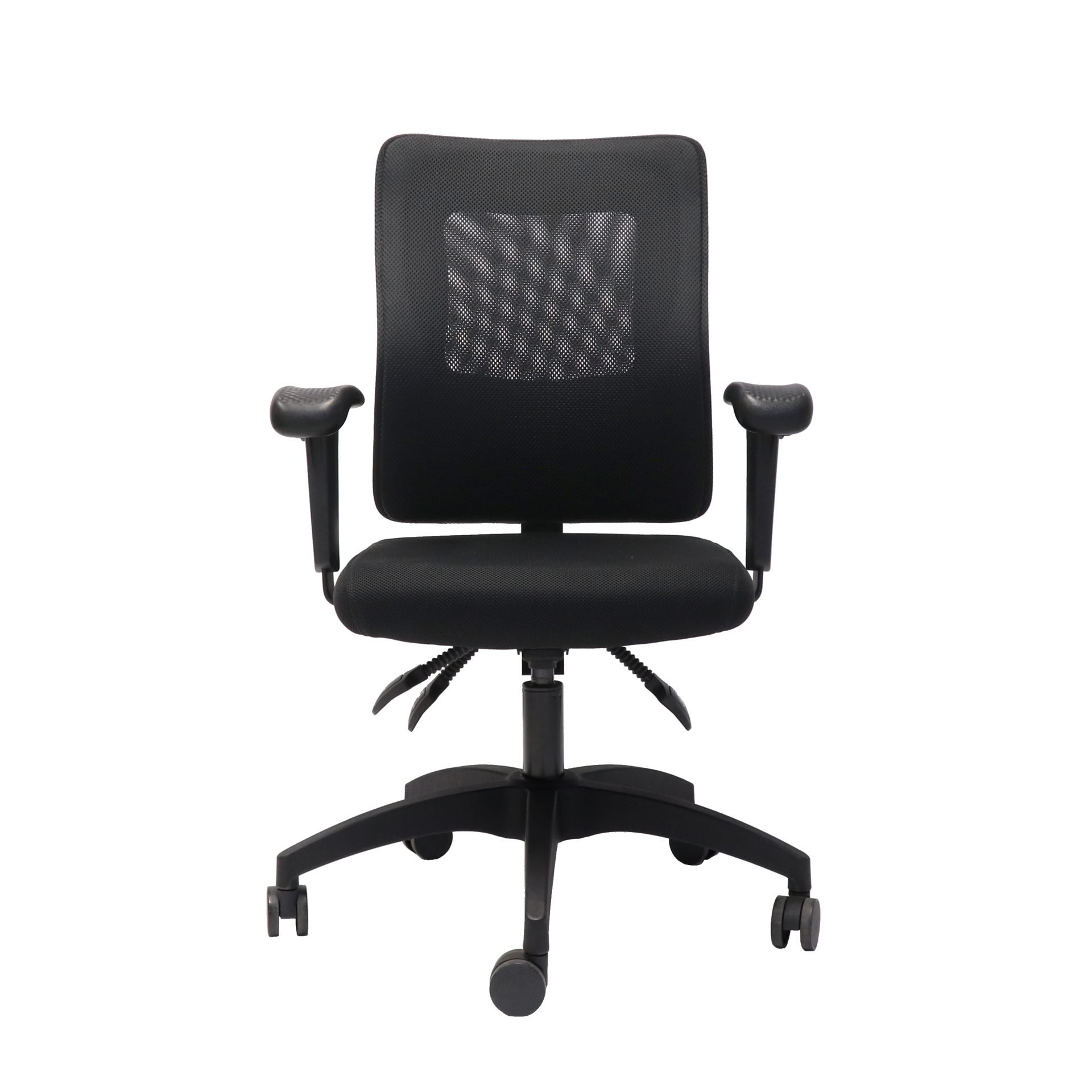
AM100 Mesh Operator Chair
-

ARCO Chair
-

Astral Executive Chair
-

Ava Black Arms
-

Ava Grey Arms
Mesh Office Chairs
What makes a mesh office chair different
A mesh office chair replaces the solid foam-and-fabric backrest with a tensioned mesh panel stretched across a frame. The change affects more than temperature. Mesh flexes slightly with body movement and distributes weight across a wider area of the back, which is why most ergonomic chair ranges use it as a default rather than an upgrade. Foam compresses under repeated use and gradually loses the shape it was moulded to; mesh doesn’t compress the same way, since the support comes from tension across the frame rather than from padding density. For a business fitting out more than a handful of desks, that’s the practical difference: a mesh chair used daily for three years still supports the way it did on day one, while an equivalent foam chair usually needs replacing sooner.
Who mesh office chairs suit best
Mesh office chairs make sense for any role where someone sits most of the day: reception, admin, call centre work, open-plan offices, and shared hot-desk setups where several people use the same chair across a week. Because mesh doesn’t hold heat the way upholstery does, it’s also a common choice for offices without strong air conditioning, or for businesses in warmer parts of Australia where a chair sits in direct sun for part of the day. Shared and hot-desk environments benefit for a second reason: mesh doesn’t hold body odour or moisture the way fabric can, which matters when a chair sees three or four different people across a single day.
What to check before you buy
A mesh office chair is more than a mesh back bolted to a frame. A few things separate a chair that lasts from one that doesn’t:
- Weight rating matched to who will use the chair, not a generic default
- Seat height, back tilt and lumbar support that adjust independently
- Armrests suited to desk height, whether fixed or fully adjustable
- AFRDI or BIFMA certification, which confirms the chair meets recognised commercial durability standards rather than a home-office spec
Sit Spot’s AFRDI/BIFMA Approved Chairs range covers models tested against these standards specifically, which matters if the chairs are going into a shared or high-turnover environment rather than a single home desk.
Mesh vs fabric office chairs: which should you choose
There’s no single right answer here. It depends on climate, hours and feel. Mesh wins on breathability and stays cooler over a full shift. Fabric and foam chairs can feel softer when new, but that padding compresses faster under daily commercial use and holds heat in warmer offices. For a workplace running chairs eight or more hours a day, mesh is generally the lower-maintenance option over the life of the chair, because it doesn’t break down the way foam does. The trade-off runs the other way for occasional or short-session seating, where fabric’s initial softness matters more than long-term durability, which is one reason fabric still suits some visitor and boardroom settings better than mesh.
What a mesh office chair typically costs to run over time
Price tiers in mesh seating usually track adjustability rather than the mesh itself. Entry-level mesh chairs cover the basics: seat height and back tilt, with a fixed lumbar curve built into the mesh shape. Mid-range models add adjustable lumbar support and 2D or 3D armrests. Fully ergonomic mesh chairs add seat depth adjustment, synchro-tilt mechanisms and 4D arms that move in every direction. The right tier depends on hours of use per day rather than budget alone: a reception chair used for short stretches rarely needs the top tier, while a chair used eight hours a day, five days a week, earns back the cost of better adjustability through fewer replacements and fewer complaints from whoever sits in it.
Caring for a mesh office chair
Mesh holds up well with basic care. A vacuum brush attachment or a damp cloth handles most dust and marks without stretching the weave, and stronger chemical cleaners are worth avoiding since they can weaken the mesh fibres over time. Check the weight rating periodically against who’s using the chair, since a chair with a fixed weight rating handles that limit consistently, but performance and lifespan both drop once it’s regularly exceeded. Small mechanical checks matter too. Gas lift cylinders and tilt tension knobs are the parts most likely to need attention after a few years of daily use, and catching a loose fitting early is cheaper than replacing the whole base later.
Sit Spot’s mesh office chair range
Sit Spot stocks mesh office chairs across several ranges, from simple operator chairs through to executive-grade mesh seating. If your team needs something simpler for shared spaces, our Task Chairs range covers the basics without the ergonomic price tag. For a full office fit-out, mesh chairs are also commonly paired with height-adjustable Workstations, since the two are usually specified together for the same desks.
Browse our full range of products from the menu above and get your desired chairs quoted, or call us directly on 1300 748 776 or 0414 247 500 to talk through what your office needs.
Frequently asked questions
Are mesh office chairs comfortable for a full working day?
Yes. A properly adjusted mesh chair with working lumbar support suits full-day use. Comfort over eight hours comes down more to correct adjustment, seat height, tilt and lumbar position, than to the mesh itself.
What’s the difference between mesh and fabric office chairs?
Mesh backing allows airflow and stays cooler over long periods. Fabric and foam chairs feel softer at first but compress and hold more heat with daily use. Mesh is generally the better fit for commercial environments with long daily hours.
Do mesh office chairs suit hot or humid climates?
Yes, this is one of the main reasons businesses choose mesh over upholstered seating, particularly in offices without strong air conditioning or in warmer parts of Australia.
Are Sit Spot’s mesh office chairs AFRDI or BIFMA rated?
Selected models in our range carry AFRDI or BIFMA certification. Check the individual product page for the specific rating, or call our team on 1300 748 776 and we’ll confirm which models suit a commercial fit-out.
How long does a commercial mesh office chair usually last?
With normal commercial use and an AFRDI-rated frame, several years of daily use is typical. Weight rating and build quality affect lifespan more than the mesh itself.
Can mesh office chairs be delivered outside Sydney?
Yes. Sit Spot delivers Australia-wide, including regional areas, with on-site assembly available. Our team is based in Castle Hill, Sydney, but most of what we ship goes elsewhere in the country.
Ready to fit out your office with the right seating? Browse our full range of products from the website menu and get your desired chairs quoted, or contact us directly and we’ll help you match chairs to the space.


